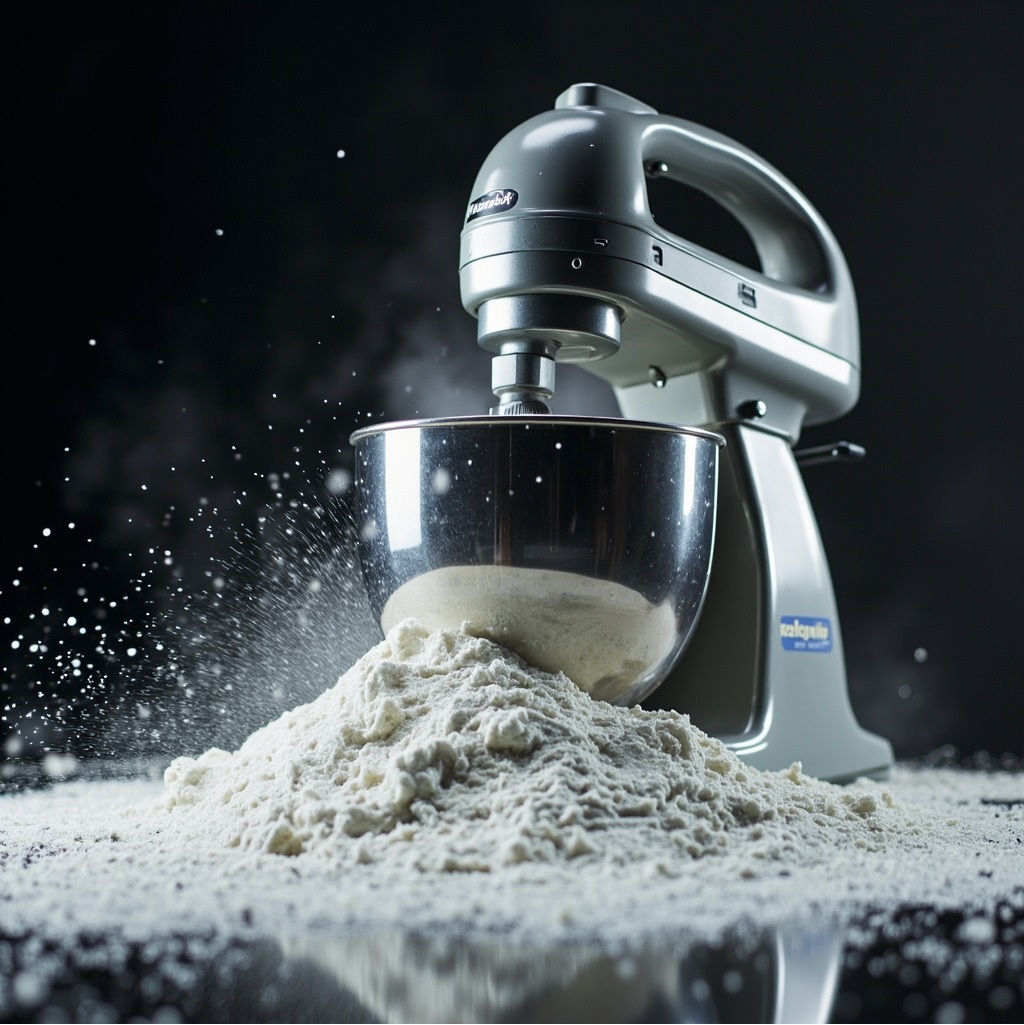
 You can stir a pot of soup with a spoon. You can shake a cocktail in a tin. But if you need to force two substances that absolutely hate each other into a permanent, intimate embrace, you do not use a spoon. You do not use a shaker. You use a machine that fights back against the material’s natural resistance. That is precisely what the Refamix Intensive Mixer with Counter-Rotation does. It doesn’t just mix. It aggressively, intelligently, and relentlessly forces homogeneity where chaos once reigned.
Let’s get one thing straight: standard mixers are lazy. They spin one blade in one direction, relying on the hope that the material will eventually cooperate. Gravity and centrifugal force create a predictable vortex, but the edges of the container remain untouched. Sticky pastes cling to the walls. Powders form stubborn clumps in the corners. The operator ends up scraping, stopping, and restarting. That is not mixing. That is a chore.
The Refamix approach is fundamentally different. It uses two counter-rotating agitators. Imagine two fists moving in opposite directions inside the same confined space. One blade pushes the material clockwise, while the other forces it counter-clockwise. The result is not a gentle swirl. It is a collision zone. The material is continuously torn apart and then slammed back together. There is no escape. Every particle, every droplet, every fiber is subjected to opposing shear forces simultaneously.
This counter-rotation mechanism solves the single most frustrating problem in industrial mixing: the dead zone. In a standard mixer, the material near the center of the vessel moves fast, while the material near the wall barely moves at all. With Refamix, the outer blade scrapes the wall clean while the inner blade churns the core. The opposing motions create a hydraulic turbulence that reaches every millimeter of the batch. No scraping. No manual intervention. Just pure, uninterrupted mechanical intensity.
Why does this matter for your bottom line? Because intensity translates directly into speed. A Refamix Intensive Mixer can reduce batch times by a significant margin compared to single-rotation systems. When you are processing high-viscosity compounds, doughs, adhesives, or heavy chemical slurries, time is money. Every minute the mixer runs, energy is consumed. Every minute the batch is incomplete, production is bottlenecked. Counter-rotation cuts that time because it eliminates the need for multiple passes. The material reaches specification in one go.
There is also a texture argument. Some products demand a specific mouthfeel, a particular consistency, or a uniform dispersion of micro-ingredients. A single-direction mixer tends to align particles in one orientation, creating a layered or anisotropic structure. Counter-rotation randomizes the orientation. It creates a chaotic, three-dimensional distribution. For industries like food, cosmetics, and advanced materials, that chaos is exactly what produces a superior final product. The Refamix delivers a mix that feels, looks, and performs uniformly.
Critics sometimes ask: is this overkill? Do you really need two blades fighting each other? The answer depends on what you are mixing. If your recipe is a simple liquid with low viscosity, a paddle will do. But if you are working with thixotropic pastes that thicken under shear, or with powders that aerate easily, or with materials that have a tendency to separate the moment you stop mixing, then yes. You need counter-rotation. You need the Refamix because it maintains a constant state of agitation that prevents settling and segregation even during the mixing process itself.
Another overlooked benefit is heat management. Intense mixing generates friction, and friction generates heat. In a single-rotor system, the heat concentrates in one area, potentially damaging heat-sensitive ingredients. The counter-rotating design of the Refamix distributes the shear evenly across the entire volume. The heat load is spread out, reducing hot spots. This allows for longer mixing cycles without thermal degradation. For pharmaceutical or specialty chemical applications, this is a non-negotiable advantage.
The engineering behind the Refamix is not just about brute force. It is about controlled force. The speeds of the two rotors can be independently adjusted. You can run the outer rotor slow and the inner rotor fast, or vice versa, depending on the material’s response. This tunability means you are not locked into a single mixing profile. You can dial in the exact level of intensity required. It is a precision instrument disguised as a heavy-duty machine.
So when you read the claim that the Refamix Intensive Mixer creates the most intense mixing, understand that this is not marketing fluff. It is a mechanical fact. Two opposing forces acting on the same mass will always produce more shear, more turbulence, and more homogeneity than a single force. The machine does not ask the material to cooperate. It commands it. And in a production environment where consistency is king and downtime is the enemy, that command is exactly what you need
You can stir a pot of soup with a spoon. You can shake a cocktail in a tin. But if you need to force two substances that absolutely hate each other into a permanent, intimate embrace, you do not use a spoon. You do not use a shaker. You use a machine that fights back against the material’s natural resistance. That is precisely what the Refamix Intensive Mixer with Counter-Rotation does. It doesn’t just mix. It aggressively, intelligently, and relentlessly forces homogeneity where chaos once reigned.
Let’s get one thing straight: standard mixers are lazy. They spin one blade in one direction, relying on the hope that the material will eventually cooperate. Gravity and centrifugal force create a predictable vortex, but the edges of the container remain untouched. Sticky pastes cling to the walls. Powders form stubborn clumps in the corners. The operator ends up scraping, stopping, and restarting. That is not mixing. That is a chore.
The Refamix approach is fundamentally different. It uses two counter-rotating agitators. Imagine two fists moving in opposite directions inside the same confined space. One blade pushes the material clockwise, while the other forces it counter-clockwise. The result is not a gentle swirl. It is a collision zone. The material is continuously torn apart and then slammed back together. There is no escape. Every particle, every droplet, every fiber is subjected to opposing shear forces simultaneously.
This counter-rotation mechanism solves the single most frustrating problem in industrial mixing: the dead zone. In a standard mixer, the material near the center of the vessel moves fast, while the material near the wall barely moves at all. With Refamix, the outer blade scrapes the wall clean while the inner blade churns the core. The opposing motions create a hydraulic turbulence that reaches every millimeter of the batch. No scraping. No manual intervention. Just pure, uninterrupted mechanical intensity.
Why does this matter for your bottom line? Because intensity translates directly into speed. A Refamix Intensive Mixer can reduce batch times by a significant margin compared to single-rotation systems. When you are processing high-viscosity compounds, doughs, adhesives, or heavy chemical slurries, time is money. Every minute the mixer runs, energy is consumed. Every minute the batch is incomplete, production is bottlenecked. Counter-rotation cuts that time because it eliminates the need for multiple passes. The material reaches specification in one go.
There is also a texture argument. Some products demand a specific mouthfeel, a particular consistency, or a uniform dispersion of micro-ingredients. A single-direction mixer tends to align particles in one orientation, creating a layered or anisotropic structure. Counter-rotation randomizes the orientation. It creates a chaotic, three-dimensional distribution. For industries like food, cosmetics, and advanced materials, that chaos is exactly what produces a superior final product. The Refamix delivers a mix that feels, looks, and performs uniformly.
Critics sometimes ask: is this overkill? Do you really need two blades fighting each other? The answer depends on what you are mixing. If your recipe is a simple liquid with low viscosity, a paddle will do. But if you are working with thixotropic pastes that thicken under shear, or with powders that aerate easily, or with materials that have a tendency to separate the moment you stop mixing, then yes. You need counter-rotation. You need the Refamix because it maintains a constant state of agitation that prevents settling and segregation even during the mixing process itself.
Another overlooked benefit is heat management. Intense mixing generates friction, and friction generates heat. In a single-rotor system, the heat concentrates in one area, potentially damaging heat-sensitive ingredients. The counter-rotating design of the Refamix distributes the shear evenly across the entire volume. The heat load is spread out, reducing hot spots. This allows for longer mixing cycles without thermal degradation. For pharmaceutical or specialty chemical applications, this is a non-negotiable advantage.
The engineering behind the Refamix is not just about brute force. It is about controlled force. The speeds of the two rotors can be independently adjusted. You can run the outer rotor slow and the inner rotor fast, or vice versa, depending on the material’s response. This tunability means you are not locked into a single mixing profile. You can dial in the exact level of intensity required. It is a precision instrument disguised as a heavy-duty machine.
So when you read the claim that the Refamix Intensive Mixer creates the most intense mixing, understand that this is not marketing fluff. It is a mechanical fact. Two opposing forces acting on the same mass will always produce more shear, more turbulence, and more homogeneity than a single force. The machine does not ask the material to cooperate. It commands it. And in a production environment where consistency is king and downtime is the enemy, that command is exactly what you need